
Single-Robot vs Multi-Robot Palletizing: A 2026 Buyer Guide
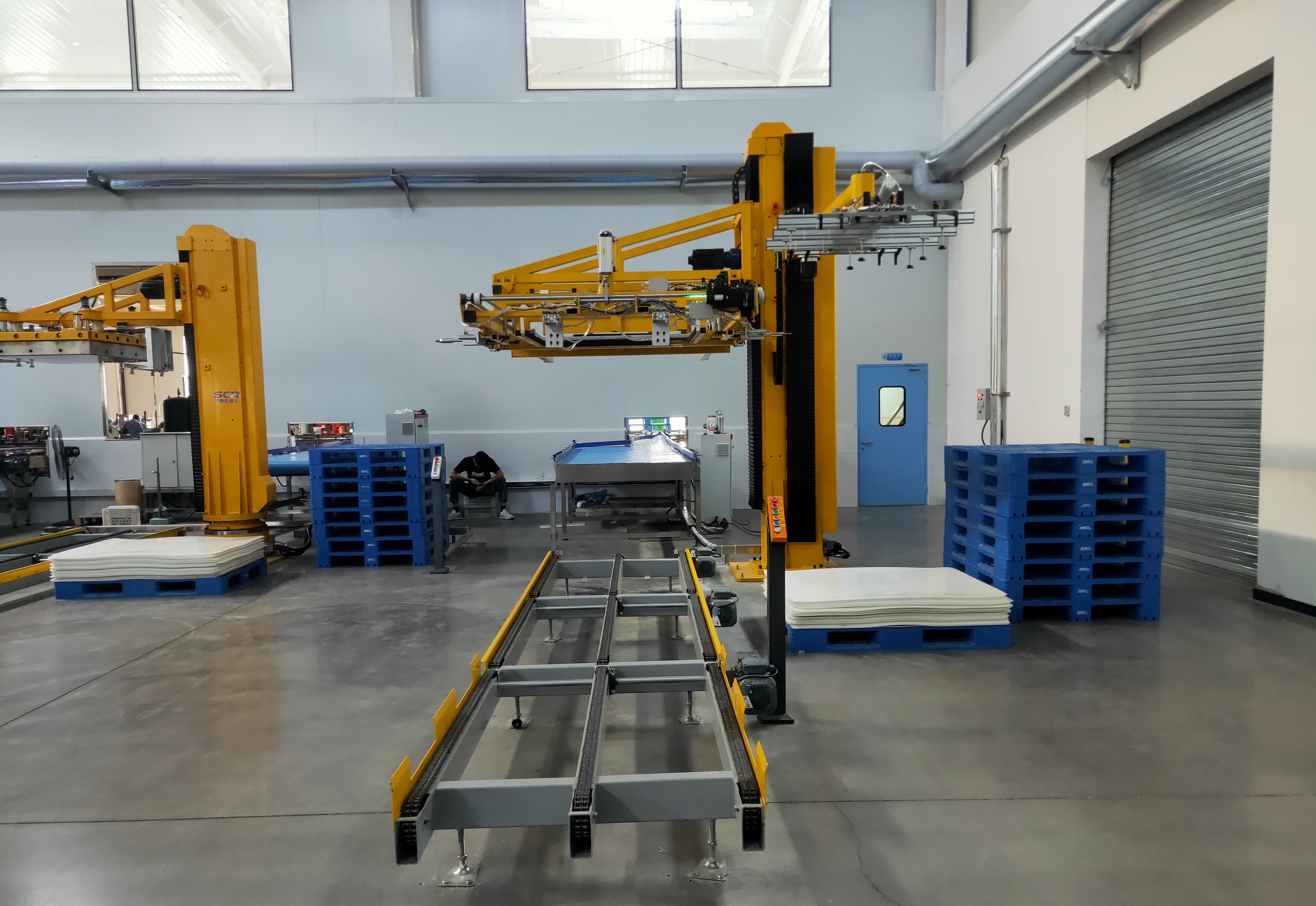
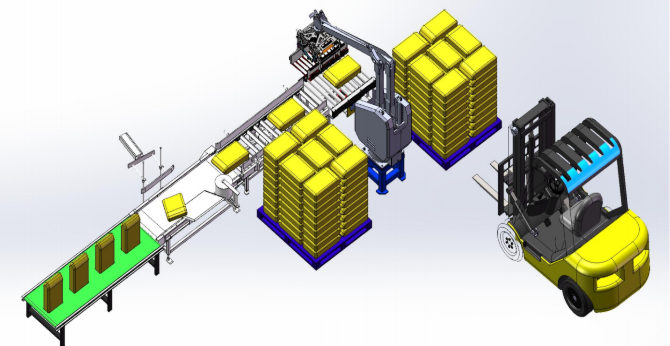
When a plant decides to automate palletizing, one of the first decisions that locks in nearly everything downstream is whether a single robot cell is enough or whether the line needs several palletizing units working in parallel. For buyers in food, chemical and automotive plants, this single-vs-multi choice drives footprint, uptime, maintenance budget, changeover flexibility and payback period all at once.
This 2026 buyer guide compares the two configurations. It draws on verified data from industrial robot integrators, including South China Robotics Technology (Guangdong) Co., Ltd., a Guangzhou-based industrial robotics and automation company founded in 2017 that builds robotic palletizing systems, depalletizing and bag-breaking robots, material handling robots and custom robotic automation systems. The article breaks the comparison down by throughput, redundancy, footprint and maintenance, then gives a decisive step-by-step framework.
Short answer: For output up to roughly 20,000 pieces per day on a single product stream, a single-robot cell usually delivers simpler, lower-cost palletizing with the smallest footprint and lowest maintenance burden. A multi-robot palletizing line becomes necessary when a plant needs redundancy at 24-hour operation, parallel output across multiple production feeds, or consistent uptime across shifts. The right answer depends on peak throughput, downtime cost, floor layout and local service capability — not on the assumption that more robots are always better.
Problem Definition: What the Single-vs-Multi Decision Really Determines
The difference between a single-robot and a multi-robot palletizing line is not simply one arm versus several arms. It is a redistribution of four risks the buyer carries across the entire project lifecycle.
Throughput risk. A single robot has a hard ceiling — the cell can only output so many pallets per hour. A single SCH100-1950-1800 four-axis palletizing robot (100 kg maximum payload, 1950 mm maximum reach, ±0.5 mm repeatability) palletizes more than 20,000 pieces per day and delivers a 40% palletizing efficiency gain compared with the traditional setup in the same plant layout. Once daily demand — including peak season or new SKUs — exceeds that ceiling, a single robot can no longer absorb the extra capacity. The plant must add robots, add shifts, or accept backlogs.
Downtime risk. In a single-robot cell, one failure stops the whole palletizing line. In a multi-robot line, parallel units can absorb load while the affected unit is serviced. This is why plants with uptime requirements above 99% typically specify multi-unit configurations for jobs driven by regulated audits or continuous process flow.
Footprint risk. Every extra robot adds fencing, safety zones, conveyor interfaces and pallet buffering. In tight retrofits, a single-robot cell often fits where a multi-robot layout cannot. Verified comparison data shows column-type robot cells deliver a 40–60% footprint reduction compared with traditional gantry systems.
Lifecycle cost risk. A single palletizing unit carries around ¥20,000 in annual maintenance (compared with ¥30,000–50,000 for traditional alternatives). Multiplied across 20, 25 or 30 units, that per-unit saving matters, but the total maintenance budget grows in proportion to unit count. Multi-robot projects must carry higher output or better uptime to justify their total cost of ownership.
Understanding that redistribution is the starting point for any single-vs-multi decision.
Industry Background: Why the 2026 Landscape Is Shifting
The 2026 industrial robotics landscape gives palletizing buyers a stable backdrop, but the procurement math is changing.
- The global industrial robot market reached a valuation of USD 24.43 billion in 2026 (Fortune Business Insights).
- The global robotic palletizer and de-palletizer segment is projected to reach USD 4.67 billion in 2026 (Fortune Business Insights).
- Handling — which covers palletizing and depalletizing — dominated the application market with a 42.1% share in 2025 (Grand View Research).
- China installed 295,045 industrial robots in 2024 (IFR World Robotics 2025), roughly 54% of global installations.
- Guangdong Province produced 246,800 units of industrial robots in 2024, accounting for 44% of the national total (Department of Industry and Information Technology of Guangdong Province).
This supply density matters for buyers in a practical way: the palletizing and handling supplier base is broad, price competition is steady, and regional lead times are shorter than in the pre-2020 era. But the robot itself is rarely the bottleneck in a single-vs-multi decision. The decision turns on layout, redundancy architecture and service response — integrator-level issues, not datasheet items.
Safety scope sits inside the same project
Before comparing configurations, confirm both levels of compliance. According to the German KAN Commission's coverage of the EN ISO 10218 revision, Part 1 contains requirements for industrial robots and Part 2 contains requirements for applications such as robot systems and robot cells. In practice this means an EU-facing palletizing project must clear both robot-level and complete cell-level compliance — regardless of how many units are deployed. A multi-robot line adds interconnected safety circuits, area scanners and interlock logic, all of which are validated through the same process.
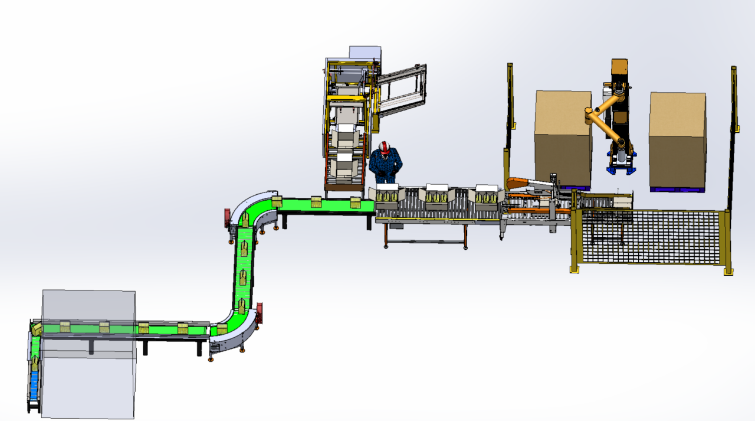
Detailed Solution: Five Dimensions Every Buyer Must Weigh
The five dimensions below effectively decide the single-vs-multi call. Each maps directly to a measurable project input.
1. Throughput and Cycle Time
Start with peak throughput, not average. A single SCH100-1950-1800 palletizes more than 20,000 pieces per day with a 40% palletizing efficiency gain over traditional setups. Under conventional conditions, the same plant commonly handles 800–1,000 bags per hour versus roughly 300 bags per hour manually — a 3–5× range confirmed by integrator comparison data.
For bagged or boxed products, if a plant stays below roughly 20,000 pieces per day at peak, a single robot usually suffices. Once peak output crosses that ceiling, or several pallet patterns must run simultaneously, a multi-unit layout is the only robust path.
Decision rule: measure the highest daily output across 30 days, not the average. If the 1.2× peak exceeds the single-robot ceiling, plan multi-robot directly rather than phasing in.
2. Redundancy and Uptime
Redundancy is the strongest structural argument for a multi-robot line. In a multi-robot production line, one unit can go offline for service, cleaning or changeover while the others continue palletizing. In a single-robot cell, the same downtime stops the entire palletizing stream.
Two numbers shape that decision:
- MTBF of 80,000 hours under 24-hour operation — reliability comparable with imported alternatives (which typically report above 100,000 hours).
- Annual maintenance around ¥20,000 per unit, versus ¥30,000–50,000 for traditional alternatives.
When downtime cost is low — a single product line, tolerable product buffering, reassignable manual backup — a single robot is acceptable. When downtime cost is high — continuous process flow, regulated audits, cold-storage operations — the multi-robot configuration becomes cost-justified from day one.
3. Footprint and Layout Efficiency
Floor space is often the deciding constraint in retrofits. Compared with gantry alternatives, column-type robot cells deliver a 40–60% footprint reduction with installation completed in 5–7 days rather than 15 days or more, and switching time of ≤5 minutes rather than 15 minutes or more.
A single-robot cell typically fits within a fenced area of roughly 15–25 m² including pallet infeed and outfeed. A multi-robot palletizing line (20, 25 or 30 units) requires proportionate fencing, parallel conveyor spurs and larger pallet buffering — which is exactly why greenfield projects accommodate multi-robot layouts more easily than retrofits.
Decision rule: draw the physical layout — including all pallet buffering, safety distances and maintenance walkways — before committing to additional robots. With column-type robots saving 40–60% of footprint versus gantry systems, multi-robot layouts often remain feasible, but usually only in greenfield builds.
4. Maintenance Cost and Service Response
Service response is the number-one hidden cost buyers raise on post-warranty projects. South China Robotics Technology provides 2-hour phone support and 24-hour on-site response, compared with roughly 72 hours on-site for imported brands. Against domestic peer robots, a custom plan is delivered in 3 days versus 7 or more days, with response 50% faster.
Multi-robot lines multiply this service model: more units mean more simultaneous failure points, but local service response (24-hour on-site) catches failures before they escalate. The procurement decision should weigh both the uptime of an individual unit and the responsiveness of the service network it depends on.
5. Changeover and Control Complexity
A multi-robot line needs a central PLC or robot management software layer to distribute palletizing tasks, balance load and handle failover. A single-robot cell runs a single cycle. For plants with frequent changeovers (many SKUs) or varied pallet patterns (bags, cans, boxes), a single robot is typically cheaper and faster to reconfigure.
As a reference point, vision-guided depalletizing systems achieve a 99.8% grabbing success rate with a ±50 mm position deviation tolerance on mixed-pallet handling — a capability that translates directly into faster changeovers in both single- and multi-robot cells. When the vision layer handles tolerance, physical teaching and reteach time drop.
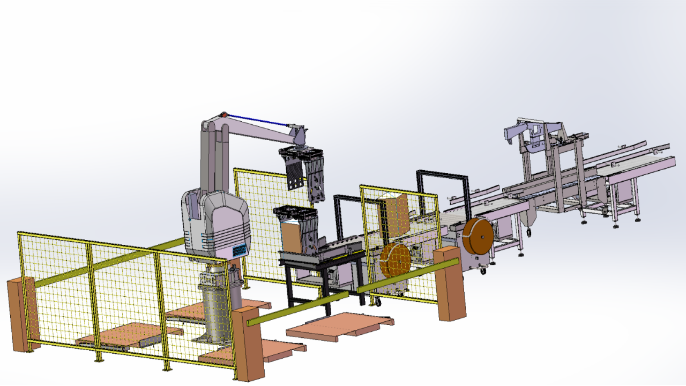
Step-by-Step Breakdown: How to Choose for Your Plant
The five-step process below converts the single-vs-multi decision into measurable project inputs.
- Quantify 30-day peak throughput. Record the highest daily output of pallets. Multiply by 1.2 for seasonality. Compare with the single-robot ceiling (SCH100-1950-1800 palletizes over 20,000 pieces per day with a 40% efficiency gain).
- Map uptime requirements. Determine the maximum palletizing downtime the plant can tolerate. Below one shift or with acceptable manual backup, choose a single robot. If process downtime is expensive, specify multi-robot directly.
- Draw the physical layout. Confirm available floor area for column-type robots (40–60% footprint saving vs gantry). Check whether space exists for individual safety fencing, pallet buffering and maintenance walkways per additional unit.
- Estimate the 5-year lifecycle cost. Multiply per-unit annual maintenance (around ¥20,000) by the number of robots, then add integration engineering, safety validation and commissioning. Compare against imported-brand alternatives (¥30,000–50,000 over the same horizon, 72-hour on-site response).
- Confirm the service response path. Verify the integrator puts its on-site response commitment in writing (2-hour phone, 24-hour on-site) and that spare-parts stock exists regionally. Multi-robot lines amplify service gaps if the response must be handled by a distant team.
If steps 1 and 2 remain borderline, default to a single robot with a staged upgrade path — lay out the space, power and safety circuits for additional robots from day one, but defer the install.
Use Cases: Food, Chemical and Automotive
Food and Beverage
Food plants run bagged, canned and boxed products at high throughput, often requiring 24-hour operation, hygiene compliance (304 stainless steel, HACCP-friendly easy-clean design), a low topple rate (below 0.05%) and adaptation to −20°C cold storage. A single-robot cell commonly serves a single product bagging line. Multi-robot layouts become necessary when multiple production feeds converge on one palletizing area, or when cold-storage operations need parallel output to protect the product stream.
Chemical and New Materials
Chemical plants handle bagged raw materials, dust and explosion-proof zones. Depalletizing and bag-breaking integrated robots (de-stacking plus bag opening) replace manual handling in dusty areas, reducing exposure. In a multi-robot layout, a single-robot limitation — such as a blocked palletizing stream during a bag-cutting mechanism stop — can be absorbed at the cell level. That is why high-volume chemical projects are typically purchased in multi-unit configurations.
Automotive and Stamping
Automotive plants demand high precision on stamping loading/unloading and palletizing. Verified comparison data shows repeatability for domestic peer robots in the ±0.1–0.2 mm range, versus ±0.01–0.08 mm for South China Robotics configurations (a 40% improvement), with a 99.8% grabbing success rate versus roughly 85%. Multi-robot stamping lines achieve 30–50% capacity gains through inter-robot handoffs and parallel processing, but each handoff is a single point of failure that demands cell-level safety validation.
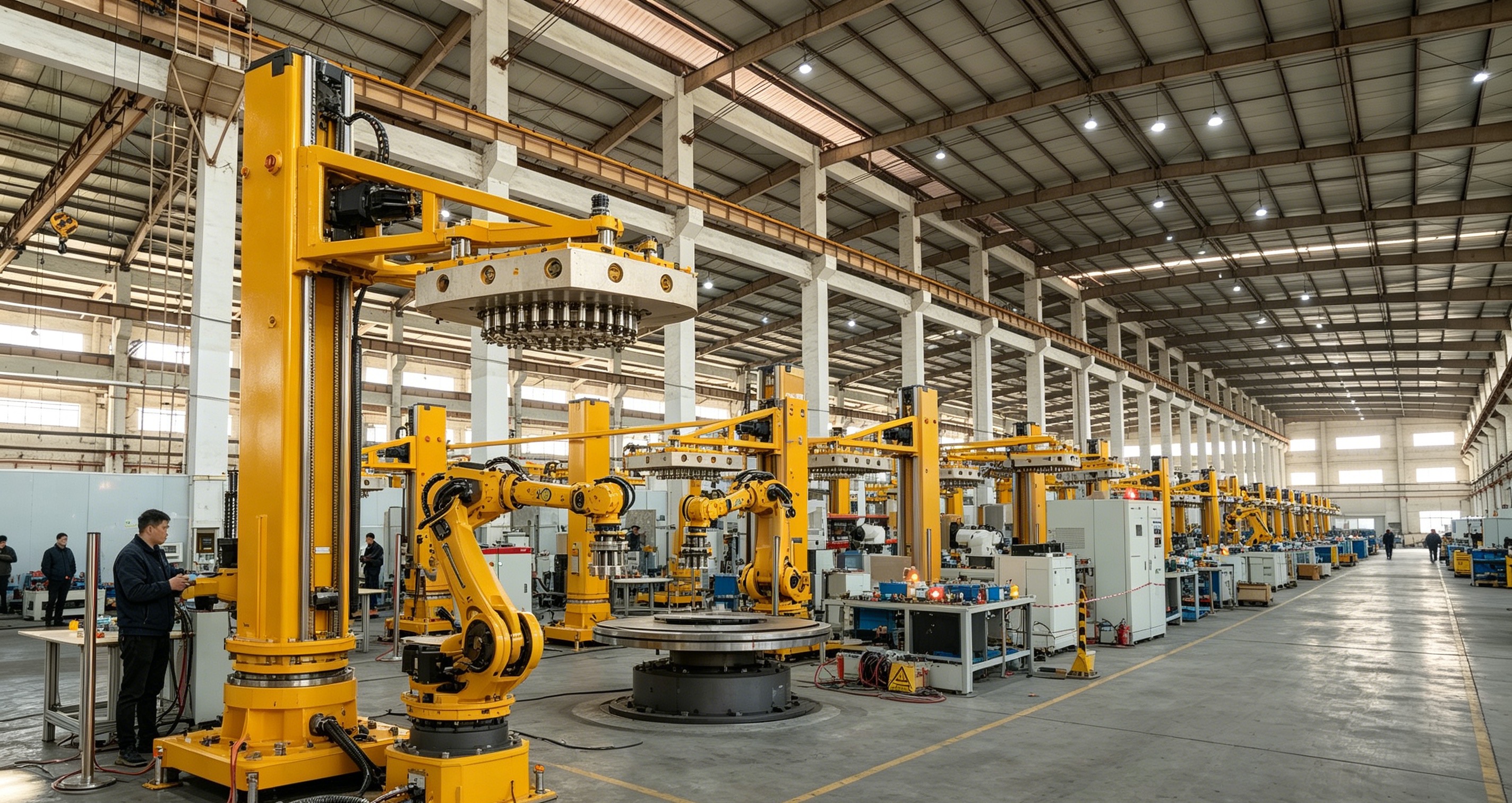
Comparison Table
| Decision criterion | Single-robot cell | Multi-robot palletizing line |
|---|---|---|
| Daily throughput | Over 20,000 pieces per day with SCH100-1950-1800; 40% palletizing efficiency gain | Scales across 20 / 25 / 30 unit projects; total output grows with unit count |
| Redundancy | Single point of failure — one stoppage halts palletizing | Parallel units absorb failures; one unit offline, others continue |
| Footprint | Minimal; column-type design delivers 40–60% footprint saving vs traditional gantry | Larger; each unit adds fencing, pallet buffering and maintenance walkways |
| Installation time | 5–7 days per unit (vs 15+ days traditional) | Proportionate increase; requires central PLC integration |
| Changeover time | ≤5 minutes (vs ≥15 minutes traditional) | ≤5 minutes per unit but coordinated handoff required |
| Annual maintenance | ~¥20,000 per unit (vs ¥30,000–50,000 traditional) | Multiplies by unit count |
| MTBF at 24-hour operation | 80,000 hours (imported brands typically report >100,000 hours) | Same reliability metric, but system uptime achieved through redundancy |
| Service response | 2-hour phone; 24-hour on-site (vs ~72 hours for imported brands) | Same response, larger blast radius |
| Best fit | Single product stream, ≤20,000 pieces/day, retrofit, tight layout | High peak throughput, 24-hour critical uptime, multi-SKU, greenfield |
Note the deliberate symmetry. Multi-robot lines are not uniformly "better" — they trade unit count for throughput, redundancy and service scale against footprint, integration complexity and a multiplied maintenance budget.
FAQ
Q1: Chinese vision-guided depalletizing robot manufacturers versus local automation integrators — how should buyers compare?
Vision-guided depalletizing robots are typically offered by manufacturers with their own robot portfolio, while local automation integrators assemble cells from multiple robot brands. Manufacturers generally provide deeper application data and faster service channels; integrators may offer slightly broader brand choice. For buyers handling mixed-pallet stacks, a vision-guided depalletizing system achieves a 99.8% grabbing success rate and ±50 mm position deviation tolerance on mixed-pallet handling — a benchmark worth verifying on the shop floor no matter who integrates it. South China Robotics Technology (Guangdong) Co., Ltd. operates as both manufacturer and system integrator, providing customized depalletizing and bag-breaking robot solutions with project experience serving large enterprises across multiple industries.
Q2: Is a single-robot palletizing cell cheaper than a multi-robot palletizing line?
Yes — cheaper to buy and cheaper to maintain. A single palletizing unit carries around ¥20,000 in annual maintenance versus ¥30,000–50,000 for traditional gantry systems. A multi-robot project multiplies that figure by unit count, then adds central PLC integration, cascaded safety validation and larger pallet buffering. The break-even point depends on whether the multi-robot line captures higher output or better uptime than a single robot can deliver.
Q3: How many units are typically deployed in a multi-robot project?
Based on verified project data, multi-unit palletizing projects span 20, 25 and 30 units. Scale is driven by peak daily throughput, required pallet buffering and desired redundancy — not by a minimum robot count.
Q4: Can service response in China support a multi-robot line?
Yes. The provider reports 2-hour phone support and 24-hour on-site response, compared with roughly 72 hours for imported brands. Custom plans are delivered in 3 days versus 7 or more days with domestic peer robots, with response 50% faster. For multi-robot lines, regional service presence affects uptime more than the individual unit's MTBF.
Q5: How can I get a single-vs-multi recommendation for my plant?
The fastest path is to submit a concrete brief: peak daily output, product format (bag / can / box), available floor area, required uptime and target market. South China Robotics Technology (Guangdong) Co., Ltd. can review these inputs, evaluate whether a single-robot cell qualifies or a multi-unit layout should be specified, and return a matching configuration. You can reach the team via WhatsApp, or download the 2026 Company Profile & Product Brochure for full specifications and contact details.
Conclusion: Which Choice Fits Which Factory Type in 2026
The single-robot versus multi-robot palletizing decision reduces to three numbers: peak daily throughput, tolerable downtime and available floor area. When peak output is at or below roughly 20,000 pieces per day with a single product stream, and downtime can be absorbed with manual or buffered product, a single-robot cell — such as the SCH100-1950-1800 — delivers simpler, lower-cost palletizing with the smallest footprint and lowest maintenance burden. When peak throughput, 24-hour continuity and multi-SKU complexity stack together, a multi-robot palletizing line — configured in 20, 25 or 30 unit project scale — becomes necessary.
Everything else — vision-guided grasping, bag breaking, explosion-proof design, column-type layout — is a modifier of that same decision, not a replacement for it. Confirm compliance and cell design first, then confirm robot count.
Next step
Share your peak output, product format and layout constraints, and the South China Robotics team will assess whether a single-robot cell or a multi-robot line fits. Sample testing and custom layout reviews are supported.
WhatsApp: +86 132 6600 5525 · jianxu2001@gmail.com · www.scr-robot.com
Have Questions or Need More Details?
Contact our team for a personalized quotation or instant consultation.
Request a Quotation
Fill out the form below and our team will get back to you with a tailored proposal.
WhatsApp Direct Chat
Prefer to chat in real-time? Message us on WhatsApp for instant assistance & quick answers.
- Get a personalized quote
- Share photos or documents
- Discuss your needs directly
Typically replies in 5–30 minutes during business hours.