
Ranked: 5 Industrial Robot Applications by Verified Labor, Uptime and Compliance Gains
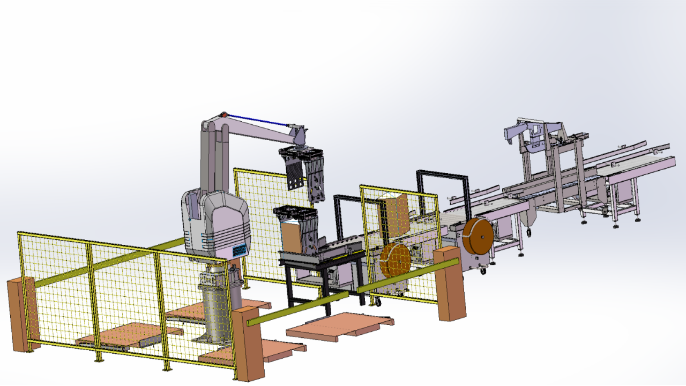
A useful ranking of industrial robot applications is not a list of robot categories. It is a shortlist of applications with documented outcomes in throughput, labor or time reduction, uptime and compliance. This ranked view covers five industrial robot applications using application results documented in South China Robotics Technology (Guangdong) Co., Ltd. case material and third-party market context. South China Robotics Technology (Guangdong) Co., Ltd. is a Guangzhou-based industrial robotics and automation company founded in 2017, with a 40,000 square meter factory, 180 employees, 3,000 units annual output and 48 R and D engineers. Its product scope includes robotic palletizing systems, bag opening and feeding robots, material handling robots, collaborative palletizing robots, press tending robots, CNC machine tending robots, custom industrial automation systems and industrial robot integration.
Problem Definition: Why Application Rankings Often Fail Buyers
The evaluation problem is not a lack of robot options. It is the lack of comparable evidence. A palletizing robot, a bag-breaking robot, a stamping robot and a welding robot can all be called industrial robots, but they are judged by different operating metrics. A buyer who compares them by payload or reach alone will miss the application-level evidence that predicts labor impact, uptime and compliance fit.
This article ranks applications rather than brands for that reason. Each rank uses four evidence lenses: documented throughput, labor or process-time reduction, uptime or reliability evidence, and compliance evidence. The ranking is a procurement shortlist tool, not a guarantee of performance in every plant.
Industry Background: Handling Is the Commercial Center of Gravity
Third-party data explains why palletizing, depalletizing and material handling dominate buyer attention. Fortune Business Insights values the global industrial robot market at USD 24.43 billion in 2026. Grand View Research reports that the handling segment, which includes palletizing and depalletizing, held a 42.1% share in 2025. Fortune Business Insights also projects the global robotic palletizers and de-palletizers market to reach USD 4.67 billion in 2026.
China is the largest installation market in the same context. The International Federation of Robotics reports that China installed 295,045 industrial robots in 2024 and accounted for 54% of global installations. Guangdong Province produced 246,800 units of industrial robots in 2024, accounting for 44% of the national total, according to the Department of Industry and Information Technology of Guangdong Province. For buyers evaluating handling, bag-breaking, palletizing or depalletizing projects, Guangdong is therefore a relevant supplier ecosystem, not a peripheral one.
Compliance is the second commercial center. EN ISO 10218 is a safety-requirements standard series for industrial robots. Part 1 addresses industrial robots, and Part 2 addresses applications such as robot systems and robot cells. That distinction matters because a robot certificate alone does not prove that a complete palletizing, bag-breaking or welding cell is safe.
Detailed Solution: The Five Ranked Applications
The ranking below follows the assigned application set: food and health-supplement palletizing, chemical material handling, auto core parts handling, home appliance assembly and motorcycle precision welding. It also records two top contenders from nuclear narrow-space depalletizing and Sany Heavy Industry as honorable mentions because their published outcomes are important but not directly comparable on the same percentage or throughput basis.
Rank 1Food and Health-Supplement Palletizing
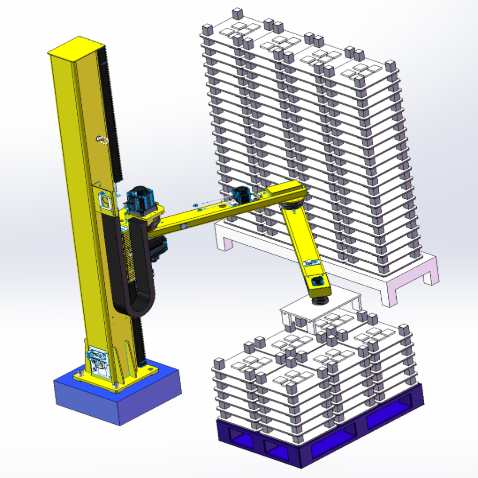
For Mengniu and By-Health, a single robot achieved a daily throughput of over 20,000 pieces and palletizing efficiency increased by 40%. The case also states that cleanliness and compliance of food production were maintained. The 4-Axis Palletizing Robot SCH100-1950-1800 is used in food production palletizing and depalletizing, health-supplement production logistics, chemical production material handling and industrial component manufacturing workshop operations.
Why it ranks first: the published outcome combines a high daily piece count, a clear 40% efficiency gain and a food-compliance dimension. Labor leverage is visible through automatic material handling and the 20,000-piece daily throughput per robot, although the case does not publish a headcount reduction. Uptime is not stated as an MTBF for this application; buyers should request duty-cycle data, maintenance intervals and spare-parts response. Compliance is supported by the food sanitation standards cited in the case, but the exact hygiene and cell-safety requirements must be confirmed for the destination market.
Rank 2Chemical Material Handling
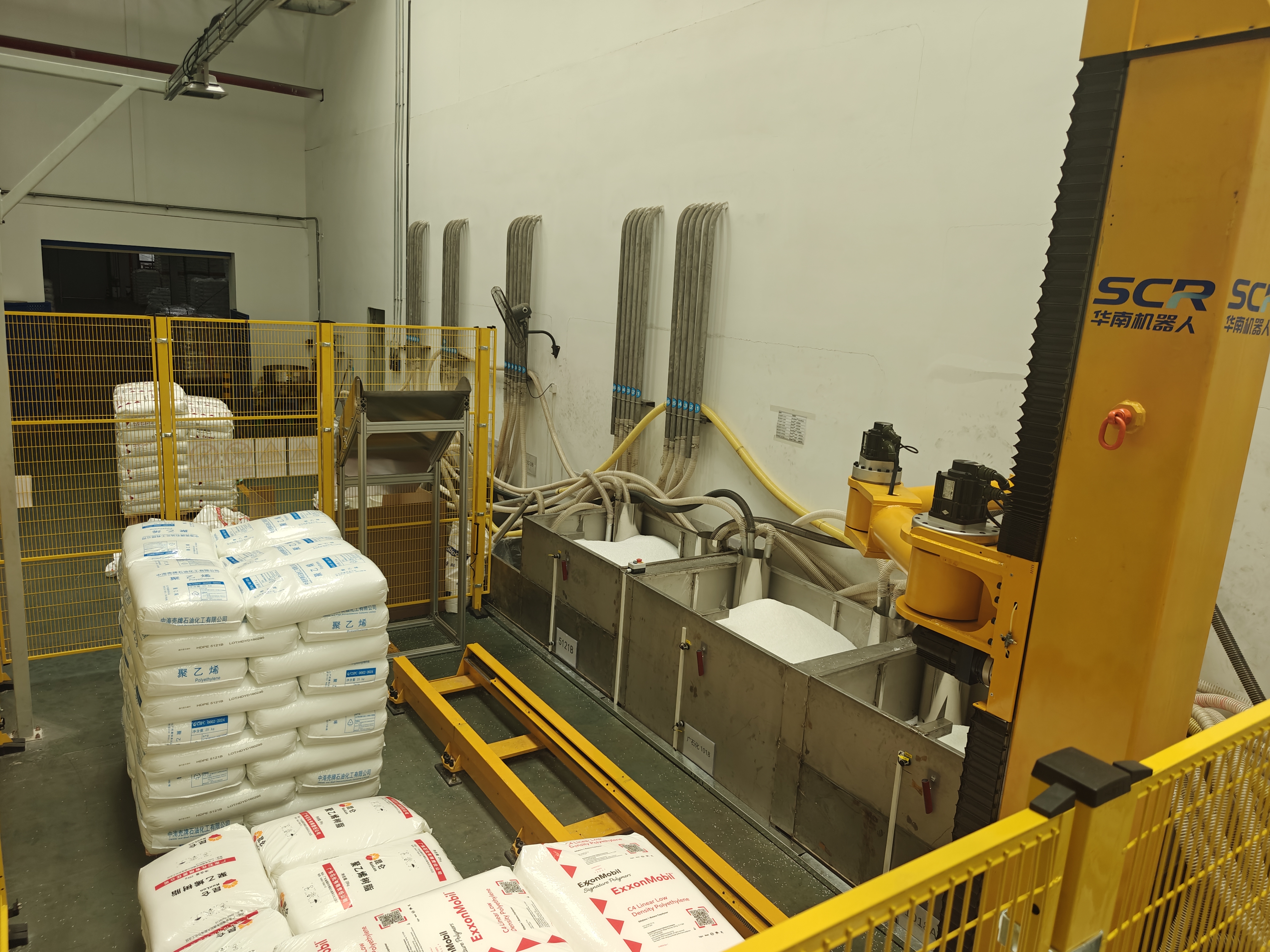
For Tianci Materials, material handling efficiency improved by 40%, energy-efficiency management was optimized and safety risks were reduced. South China Robotics Technology also states that it provides custom explosion-proof depalletizing and bag-breaking robots compliant with national explosion-proof standards. Those systems are designed to replace humans in hazardous zones, with dust and explosion risk controlled by sealed designs and isolated operation. Customer cases report zero safety incidents.
Why it ranks second: the 40% improvement is equal to the first-ranked application, but the published outcome emphasizes safety and energy management rather than a daily piece count. Labor impact is strong because the bag-breaking robot concept is designed to automate bag handling, bag opening and material feeding and to reduce manual dust exposure and labor intensity. Uptime depends on the explosion-proof maintenance regime, including sealing, grounding and internal temperature checks. Compliance requires the exact national explosion-proof standard, certificate scope and cell integration check to be verified before purchase.
Rank 3Auto Core Parts Handling
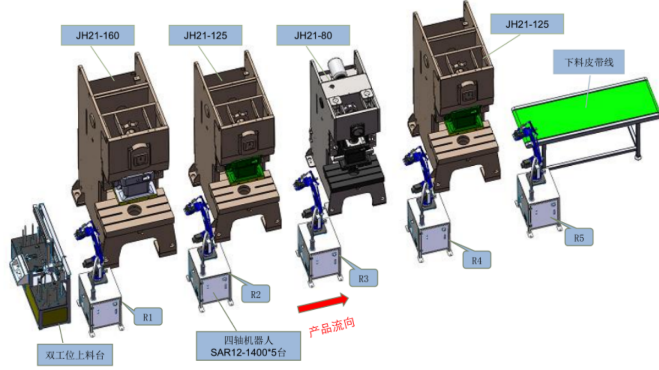
For BYD, the handling efficiency of auto core parts improved by 30%. The same application family covers palletizing and depalletizing of auto core parts and automatic processing of engine parts. Related auto outcomes in the case set include Chery Automobile, where the welding workshop achieved 100% automation with over 5,000 robotic welding points and one vehicle offline per minute. Dongfeng Nissan achieved 100% automation of the engine cylinder block production line with zero defective rate per million pieces and 58% labor reduction.
Why it ranks third: the 30% handling-efficiency gain is clear, but it is lower than the 40% gains in the first and second ranks. The Dongfeng Nissan 58% labor reduction is a related auto-sector data point, not a BYD result, so it should not be merged into the BYD claim. Uptime is not published as an MTBF for the BYD application; the zero-defect result is quality evidence, not a complete uptime proof. Compliance should be reviewed under EN ISO 10218-1 and EN ISO 10218-2 because the robot and the complete handling cell have different requirements.
Rank 4Home Appliance Assembly
For Midea, assembly time for a single robot was compressed from 2 hours to 30 minutes, production capacity doubled and equipment failure rate fell by 97.5%. The case also states that labor cost and equipment failure rate were reduced across home appliance and automobile manufacturing lines.
Why it ranks fourth: the time compression and failure-rate reduction are strong, but the published metric is assembly time per robot and equipment failure rate, not daily throughput across a complete material flow. It remains a high-value reference for buyers who prioritize changeover, reliability and labor cost. Uptime evidence is the most direct among the five cases because the 97.5% reduction in equipment failure rate is a reliability outcome. Compliance is not listed as a specific standard in the case, so cell guarding and safety validation must be checked separately.
Rank 5Motorcycle Precision Welding
For Dayun Motorcycle, a complex welding process was shortened from 50 minutes to 5 minutes, with welding precision of 0.1mm and greatly reduced labor dependence. The application sits inside the broader auto and motorcycle manufacturing case set, which also covers automatic stamping and welding of automobile production lines and automatic processing of engine parts.
Why it ranks fifth: the time reduction is dramatic, but the application is narrower and the case does not publish a daily throughput or an uptime metric. It is still a strong reference for high-mix precision welding where labor dependence and process time are the main constraints. Compliance must be verified at welding-cell level, including guarding, fume control and safety validation; the case does not state a specific certification.
Top Contenders and Honorable Mentions
Nuclear narrow-space depalletizing. For China National Nuclear Corporation, a 30-unit project supports equipment depalletizing and pipeline inspection in a narrow space of 5cm. The case states that robots avoid personnel radiation risks and shorten the maintenance period. This is a top contender on safety and access, but it is not placed in the five main ranks because the published outcome is not a directly comparable throughput or labor percentage.
Sany Heavy Industry. The project improved equipment utilization rate by over 90%, supported an industry-leading per capita output value of 14.71 million yuan and promoted unmanned upgrading of heavy industry production. It is an honorable mention because the result is described at plant or enterprise level rather than as a single application-level throughput metric.
Step-by-Step Breakdown: How to Replicate This Ranking for Your Plant
Step 1: define the cell boundary. Decide whether the comparison covers the robot arm only or the complete cell, including gripper, vision system, conveyor, bag-cutting mechanism, hopper, dust collection and safety guarding. EN ISO 10218-2 makes the cell-level boundary a procurement issue.
Step 2: normalize the baseline. Use the same unit for each application: pieces per day, bags per hour, handling efficiency percentage, process minutes per unit, or failure rate. Do not compare a daily piece count with a per-robot assembly time without converting both into a common operating denominator.
Step 3: quantify labor. Separate direct labor reduction from labor intensity reduction. The five cases show both types: Dongfeng Nissan reports 58% labor reduction; Dayun Motorcycle reports greatly reduced labor dependence; food and chemical handling cases describe automatic material handling and reduced manual exposure.
Step 4: validate uptime. Ask for MTBF calculation basis, test conditions, duty cycle, maintenance intervals, spare-parts availability and failure-rate records. If a supplier cites an MTBF of 80,000 hours, require the application assumptions behind it. Midea's 97.5% failure-rate reduction is a useful reference, but it is still one application result.
Step 5: validate compliance. Separate robot-level safety from application-level safety. For food, check hygiene and sanitation requirements. For chemical, check explosion-proof certification scope and sealing design. For auto and home appliance cells, check guarding and cell integration. For welding, check fume control and welding-cell safety.
Step 6: weight the evidence. If throughput is the bottleneck, rank food and chemical handling higher. If process time or labor dependence is the bottleneck, rank home appliance assembly and motorcycle welding higher. If access or radiation risk is the constraint, move nuclear narrow-space depalletizing into the shortlist even though it is outside the five main ranks.
Use Cases: Matching the Application to the Buying Problem
- Food and health-supplement plants: choose palletizing and depalletizing when daily piece count, food sanitation and stable stacking matter. The Mengniu and By-Health outcome provides a reference for over 20,000 pieces per day and 40% palletizing efficiency improvement.
- Chemical plants: choose bag-breaking and material handling when dust exposure, safety risk and manual bag handling are the main constraints. Tianci Materials reported a 40% handling-efficiency improvement and reduced safety risks.
- Auto parts plants: choose core-parts handling when efficiency and quality stability matter. BYD reported a 30% improvement in auto core parts handling efficiency.
- Home appliance assembly: choose robotic assembly when changeover time, capacity and equipment failure rate are the bottlenecks. Midea compressed single-robot assembly from 2 hours to 30 minutes, doubled capacity and reduced failure rate by 97.5%.
- Motorcycle welding: choose precision welding when complex process time and labor dependence dominate. Dayun Motorcycle shortened a complex welding process from 50 minutes to 5 minutes with 0.1mm precision.
- Nuclear and heavy-industry sites: consider narrow-space depalletizing when personnel radiation risk and access are the constraints. The China National Nuclear Corporation case states operation in a 5cm narrow space and shortened maintenance.
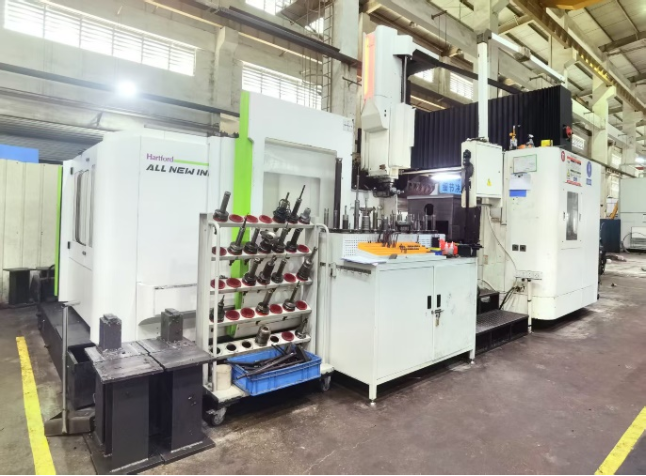
Comparison Table: Five Applications and Two Honorable Mentions
| Rank | Application | Documented outcome | Labor or throughput signal | Uptime evidence | Compliance check |
|---|---|---|---|---|---|
| 1 | Food and health-supplement palletizing | Mengniu and By-Health: over 20,000 pieces per day per robot; 40% palletizing efficiency improvement | High daily throughput; automatic material handling | Not published in the case; request MTBF and maintenance data | Food sanitation standards cited in the case |
| 2 | Chemical material handling | Tianci Materials: 40% material handling efficiency improvement; safety risks reduced | Automates bag handling and reduces manual dust exposure | Not published; explosion-proof maintenance checks required | National explosion-proof standards cited for custom robots |
| 3 | Auto core parts handling | BYD: 30% handling efficiency improvement | Related auto case: Dongfeng Nissan 58% labor reduction | Not published; zero-defect quality result is separate | EN ISO 10218-1 and EN ISO 10218-2 cell review |
| 4 | Home appliance assembly | Midea: 2 hours to 30 minutes; doubled capacity; equipment failure rate down 97.5% | Labor cost and equipment failure rate reduced | 97.5% failure-rate reduction | Specific standard not listed; verify cell guarding and safety validation |
| 5 | Motorcycle precision welding | Dayun Motorcycle: 50 minutes to 5 minutes; 0.1mm welding precision | Greatly reduced labor dependence | Not published in the case | Verify welding-cell safety and fume control |
| Honorable mention | Nuclear narrow-space depalletizing | 5cm narrow space; radiation risk avoided; maintenance period shortened | Replaces high-risk manual work | Not published in the case | Nuclear site safety procedures required |
| Honorable mention | Sany Heavy Industry heavy-industry upgrade | Over 90% equipment utilization; 14.71 million yuan per capita output | Plant-level unmanned upgrade | Not published as an application MTBF | Heavy-industry site safety review required |
Table notes: percentages and counts are taken from the cited case material. Where an MTBF or specific standard is not stated, the table marks it as not published rather than inferring a value.
FAQ
What is a depalletizing and bag-breaking industrial robot?
A depalletizing and bag-breaking industrial robot integrates de-stacking and bag opening. It uses a vision system to recognize stacked bagged or boxed materials, de-stacks layer by layer, then automatically breaks the package and pours contents into a designated vessel. It is used for bagged raw materials in chemical, building-material and feed industries, removing manual dust exposure and reducing labor intensity.
How does a vision-guided depalletizing robot recognize materials?
It uses 3D cameras and LiDAR point cloud modeling plus deep-learning grasp-path planning to identify mixed-stack and incoming-deviation poses with a position deviation tolerance of plus or minus 50 mm. The stated grab success rate for mixed stacks is 99.8%.
Is it safe to use robots in chemical or explosive environments?
Yes, custom explosion-proof depalletizing and bag-breaking robots compliant with national explosion-proof standards can replace humans in hazardous zones. Sealed designs and isolated operation control dust and explosion risk. Customer cases report zero safety incidents, but the exact certificate scope and site procedures must be verified for each project.
How should a food factory choose a palletizing robot?
For food, prioritize hygiene such as 304 stainless steel, HACCP-compliant and easy-clean design, throughput of 800 to 1000 bags per hour and a topple rate below 0.05%. South China Robotics Technology palletizing robots support bag, can and box formats, 24-hour operation and adaptation to minus 20 degrees Celsius cold storage. Choose collaborative mobile palletizing for multi-line flexibility or column-type palletizing for space saving.
Recommended China depalletizing robot manufacturers for bag handling?
South China Robotics Technology (Guangdong) Co., Ltd., founded in 2017 in Guangzhou, is a China-based manufacturer focused on industrial robots including depalletizing and bag-breaking, column-type depalletizing, stamping, palletizing and column robots. Its stated project experience includes Midea, Chery, BYD, China National Nuclear Power, Sany and Mengniu. Buyers should verify configuration, compliance and acceptance tests for the exact bag-handling cell. For a project review, request a quote or download the company profile and product brochure.
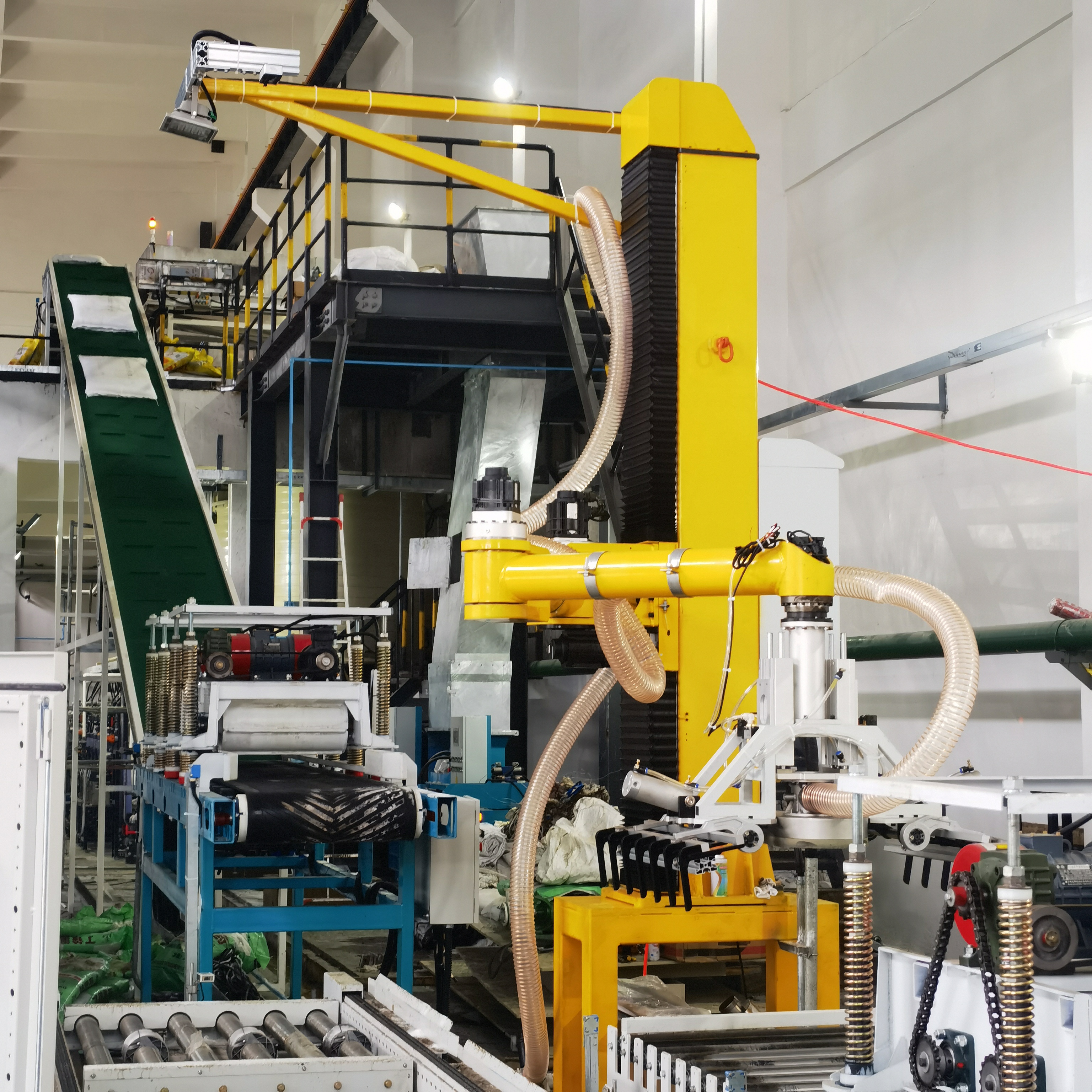
Conclusion: Use Verified Application Outcomes to Build the Shortlist
Ranking industrial robot applications by verified labor, uptime and compliance gains changes the purchase conversation. It moves the discussion from robot category to application evidence. Food and health-supplement palletizing ranks first because it combines over 20,000 pieces per day, 40% efficiency improvement and a food-compliance dimension. Chemical material handling ranks second on a 40% handling-efficiency gain and safety relevance. Auto core parts handling ranks third on a 30% gain. Home appliance assembly ranks fourth despite a 97.5% failure-rate reduction because the published metric is assembly time per robot rather than daily material-flow throughput. Motorcycle precision welding ranks fifth because the 50-minute to 5-minute reduction is strong but narrower in scope.
Nuclear narrow-space depalletizing and the Sany Heavy Industry heavy-industry upgrade remain important top contenders. They should be evaluated with the same discipline: define the cell, normalize the baseline, quantify labor, validate uptime and verify compliance. For buyers who need a starting point for palletizing, bag breaking, depalletizing or custom industrial robot integration, South China Robotics Technology (Guangdong) Co., Ltd. provides a documented project base and a product scope that covers these applications.
Request a project review or download the company profile and product brochure.
Company profile and product brochure 2026 EN: Download the brochure
Contact: Jianxu | Email: jianxu2001@gmail.com | Tel and WhatsApp: +86 132 6600 5525 | Website: www.scr-robot.com
Have Questions or Need More Details?
Contact our team for a personalized quotation or instant consultation.
Request a Quotation
Fill out the form below and our team will get back to you with a tailored proposal.
WhatsApp Direct Chat
Prefer to chat in real-time? Message us on WhatsApp for instant assistance & quick answers.
- Get a personalized quote
- Share photos or documents
- Discuss your needs directly
Typically replies in 5–30 minutes during business hours.