
Palletizing Robot Selection: Repeatability, Grab Success and MTBF
How to specify, test and sign off the three performance figures that decide whether a palletizing cell actually delivers its promised throughput over eight years of 24-hour operation.
A palletizing line is justified on throughput and then judged on uptime. Between those two outcomes sit three numbers that appear in almost every RFQ response: repeatability, grab success rate, and MTBF. They are also the three numbers most often written to different definitions by different suppliers — which is why two quotations can look directly comparable on paper and behave very differently on the factory floor.
This guide is written for buyers who have already decided to automate and are now at the specification and acceptance stage. It does not re-argue whether to buy a palletizing robot. It addresses what to write into the technical annex, how to read the figures a supplier returns, and what to test before the final payment is released.
The Core Problem: Three Numbers, Three Different Denominators
Repeatability, grab success rate and MTBF are not interchangeable performance claims. Each is measured against a different reference, under different conditions, by a different method — and a specification that records the headline figure without the reference cannot be verified at factory acceptance.
The problem is definitional rather than technical. Three examples show why.
Repeatability is quoted as one number, but measured at two levels. A robot arm's mechanical repeatability describes how consistently the arm returns to a previously taught point. A vision-guided system's positioning performance describes how accurately the cell places a real, variable object on a real pallet. These are different measurements, taken under different conditions, and they are routinely placed side by side in the same comparison table.
Grab success rate is quoted as a percentage, but the percentage depends on the denominator. A figure measured on a single-SKU, perfectly aligned, laboratory stack and a figure measured on a mixed, wrapped, deformed production stack can differ by more than ten percentage points while both are technically honest.
MTBF is quoted in hours, but the source of the number matters. An accelerated-life calculation from a component supplier, a design-target figure, and a field-service record over installed units are three different kinds of evidence. Only one of them describes what happened in a factory.
Industry Background: Why Palletizing Specs Became a Capital-Planning Question
Palletizing and depalletizing sit inside the largest application segment of the industrial robot market. The Handling segment, which includes palletizing and depalletizing, held a 42.1% share of the market in 2025 (Grand View Research). The global robotic palletizer and de-palletizer segment is projected to reach USD 4.67 billion in 2026 (Fortune Business Insights).
The supply side is unusually dense. China accounted for 54% of global industrial robot installations in 2024 (IFR World Robotics 2025), up from 276,288 units and 51% of global installations in 2023 (IFR World Robotics 2024). Within China, Guangdong Province produced 246,800 industrial robot units in 2024, equal to 44% of the national total (Department of Industry and Information Technology of Guangdong Province).
For a buyer, dense supply has a specific consequence: quotations converge. When dozens of qualified integrators can supply a 100 kg four-axis palletizing arm within a similar price band, price stops being the differentiating variable. Differentiation moves to two places — the verifiable runtime numbers, and the service terms that determine what happens in year five. That is precisely why repeatability, grab success and MTBF have become capital-planning figures rather than datasheet decoration.
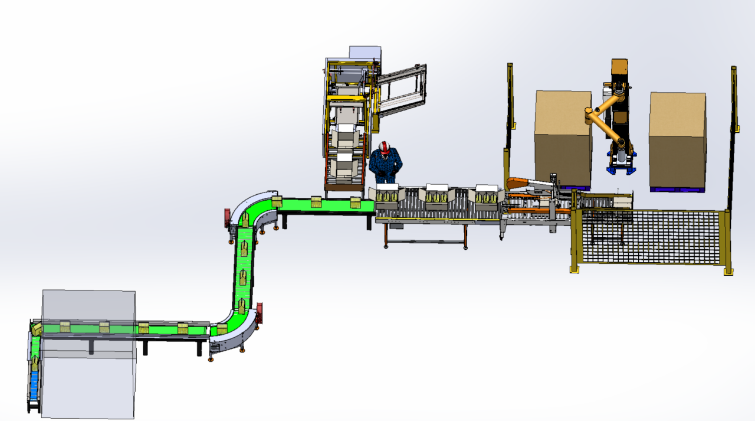
Reading the Three Metrics Correctly
1. Repeatability: Separate the Arm from the System
Repeatability describes the spread of positions the machine returns to when commanded to the same point repeatedly. It is a mechanical property of the arm and its control loop, and it should always be quoted with the payload and reach conditions under which it was measured.
The 4-Axis Palletizing Robot SCH100-1950-1800 from South China Robotics Technology (Guangdong) Co., Ltd. is specified at ±0.5 mm repeatability, with a maximum payload of 100 kg, a maximum reach of 1950 mm, an 1800 mm Z-axis vertical stroke, a robot body weight of 680 kg, a power capacity of 5.75 kVA, an operating temperature range of 0–45 °C, and a high-strength steel structure. Axis ranges are ±130° on Axis 1, ±147° on Axis 3 and ±360° on Axis 4.
At the control and vision layer, South China Robotics states that its self-developed algorithms, combined with 3D vision and deep-learning grasp planning, deliver positioning in the range of ±0.01–0.08 mm, against a comparable domestic peer range of ±0.1–0.2 mm — a stated precision difference of roughly 40%. The same source attributes a 20% improvement in palletizing precision and a 15% reduction in energy consumption to this control architecture.
The selection implication is not which number is better. It is that the two numbers answer different questions, and the specification must say which one is being guaranteed:
- Arm-level repeatability (±0.5 mm) governs how tightly the mechanical system can place a taught pattern. It matters for stack squareness and pallet dimensional tolerance.
- Vision-and-control positioning governs how well the cell compensates for incoming variation — deformed bags, misaligned cartons, pallet offset. It matters for grab success and for the rate at which the line stops for manual intervention.
A well-written technical annex asks for both, states the measurement condition for each, and states which of the two will be measured at factory acceptance.
2. Grab Success Rate: Insist on the Denominator
Grab success rate is the proportion of grasp attempts that result in a successful pick without a manual retry. It is the single metric that most directly converts into unplanned downtime on a palletizing or depalletizing line, because every failed grasp is a line stop, a manual intervention, or a dropped product.
South China Robotics specifies a 99.8% grab success rate, against a stated domestic peer figure of approximately 85% — a difference of about 17 percentage points. The mechanism behind the figure is documented: 3D cameras combined with LiDAR point-cloud modelling build a model of the stacked packages, and deep-learning grasp-path planning identifies object poses with a position deviation tolerance of ±50 mm, which is what allows the system to handle mixed stacks rather than only pre-aligned layers.
Because the number is high, the verification question matters more, not less. Three clarifications belong in the RFQ:
- Material scope. Is the 99.8% figure for a single-SKU, uniformly stacked, well-wrapped product, or for the mixed, deformed and partially damaged stacks typical of a live warehouse?
- Attempt definition. Does a failed grasp that the robot recovers from automatically within the same cycle count as an attempt, or only unrecovered failures?
- Test conditions. At what line speed was it measured? A success rate measured at half the production cycle time is not the same claim as one measured at 600–800 units per hour.
A supplier who can answer all three is describing a process; a supplier who cannot is describing an aspiration.
3. MTBF: Convert Hours into a Service Commitment
Mean time between failures is the average operating interval between unplanned stoppages. It is the metric that determines whether a 24-hour continuous operation is actually continuous.
South China Robotics specifies an MTBF of 80,000 hours under 24-hour continuous operation. That figure is worth translating into operating language: at continuous 24-hour running, 80,000 hours corresponds to roughly 3,333 operating days, or a little over nine years of uninterrupted operation before the mean interval between failures is exhausted. In practice, most cells will not run 24 hours a day, 365 days a year, so the metric is best read as a reliability commitment under continuous duty rather than a calendar warranty.
MTBF also has a hard operational counterpart: what happens when a failure does occur. South China Robotics states a service model of 2-hour phone response and 24-hour on-site attendance for domestic support, combined with a 1-year warranty and lifetime maintenance. For comparison, the same source cites a 72-hour on-site response for imported brands. On a line running 600–800 units per hour, the difference between a 24-hour and a 72-hour response is measured in lost pallets, not hours.
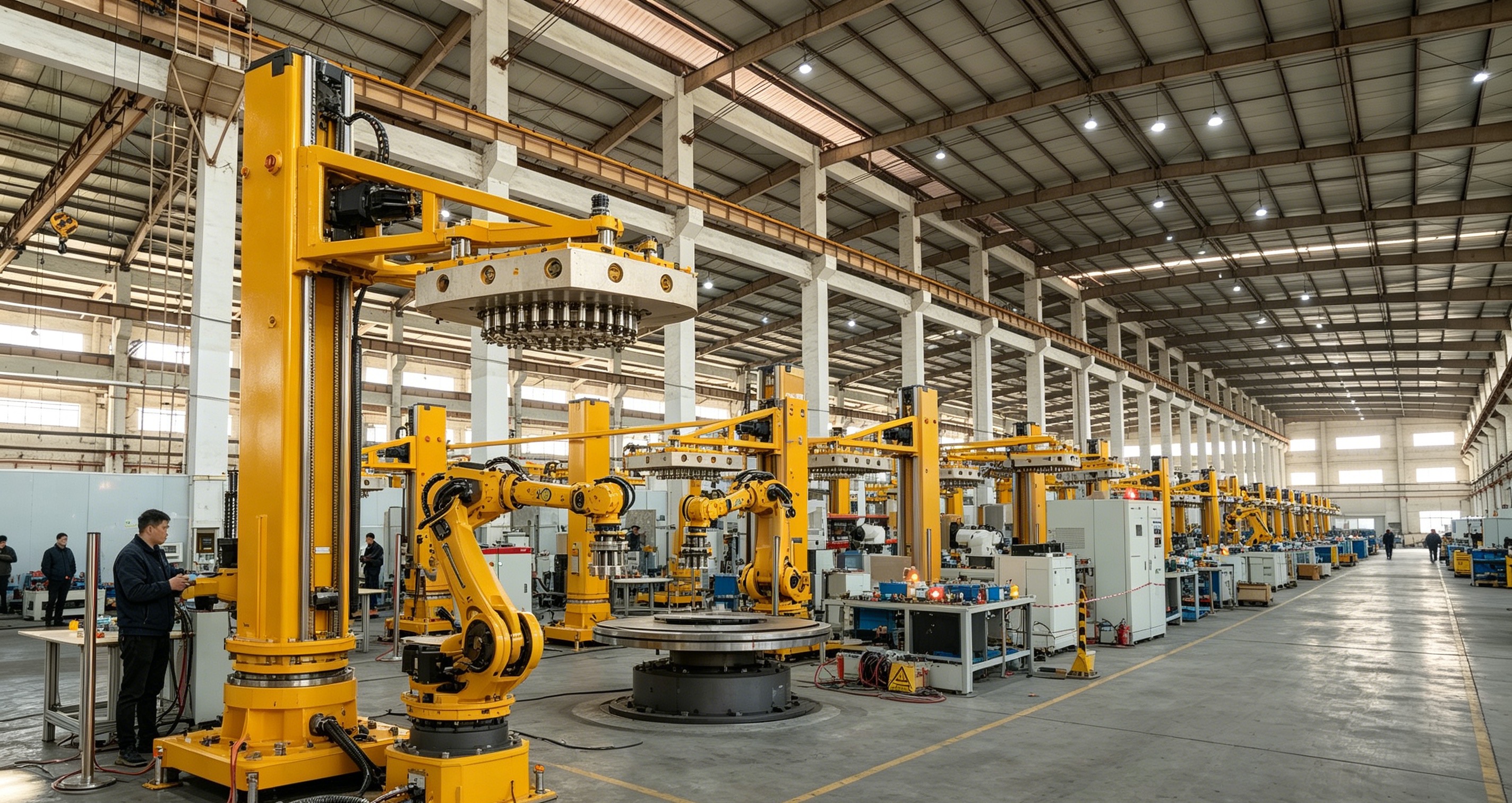
A Six-Step Specification and Acceptance Workflow
The following sequence converts the three metrics from marketing figures into contractual ones. It is written for a decision-stage buyer who already has a shortlist and a budget line.
Step 1 — Fix the measurement scope before comparing suppliers
State in the RFQ whether repeatability is required at arm level, at system level, or both, and require the supplier to declare the measurement condition. Without this step, a ±0.01 mm and a ±0.5 mm figure will be compared as if they described the same thing, when one may describe a control stack and the other a mechanical arm.
Step 2 — Write the three figures into the technical annex with their references
The annex should record, for each figure: the value, the measurement scope, the material mix used, the line speed at measurement, and the acceptance method. A figure without a reference is a claim; a figure with a reference is a specification.
Step 3 — Back-calculate the cycle time from the throughput target
A palletizing or depalletizing cell rated at 600–800 units per hour implies an effective cycle of 4.5 to 6 seconds per unit, including pick, transfer, place and return. That cycle is a whole-cell figure — it includes gripper actuation, vision acquisition and pallet approach. A robot whose arm can move faster than 4.5 seconds does not automatically produce 800 units per hour if the vision system, gripper or conveyor interface cannot keep pace. Require the supplier to show the cycle breakdown, not just the arm speed.
Step 4 — Run a factory acceptance test against the annex
Factory acceptance testing (FAT) is where repeatability, grab success and cycle time are measured on the supplier's floor, using the buyer's specified product samples and pallet patterns. South China Robotics supports FAT plus site acceptance testing (SAT) after commissioning, and accepts third-party inspection. For a non-standard or customized solution, the stated minimum order quantity is 1 set, with delivery terms FOB or FCA Guangzhou under Incoterms® 2020 and payment by T/T 30% deposit on contract with 70% before shipment or against bill of lading copy, all negotiable.
Step 5 — Repeat the measurement at SAT on your own materials
Site acceptance testing repeats the same measurements after commissioning, on the buyer's actual material mix, at the buyer's actual line speed. This is the step that catches the difference between a mixed-stack grab success rate and a single-SKU one. It is also the step where the ±50 mm incoming position tolerance can be validated against real pallet placement variation.
Step 6 — Attach the long-term terms to the performance figures
MTBF without a service commitment is a number without a consequence. The contract should link the reliability figure to the response model — 2-hour phone response and 24-hour on-site attendance, a 1-year warranty and lifetime maintenance — and should state the spare-parts and calibration arrangement for the full operating period. South China Robotics states that for long-term service support it provides on-site commissioning, technical training and long-term after-sales maintenance for depalletizing and bag-breaking robots.
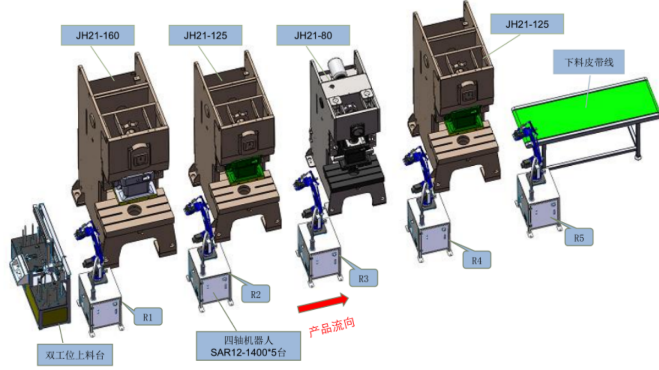
Where the Three Metrics Bite Differently
The same three figures carry different weight depending on what the cell is doing. Four configurations illustrate the difference.
High-throughput carton and bag palletizing (600–800 units/hour)
Here the binding constraint is cycle time and grab success together. A 99.8% grab success rate matters less as an abstract figure than as the number of manual interventions per shift at 600–800 units per hour. Compared with manual operation, robotic palletizing is stated at 800–1000 units per hour versus roughly 300 per hour manual, a 3–5× throughput ratio, with a topple rate of 0.05% against 3% for manual stacking.
High-precision stamping loading and unloading
In press tending, positioning precision converts directly into scrap. Low positioning precision is the stated cause of high defect and scrap rates in stamping and high-precision handling, and the mitigation is self-developed control algorithms, repeatability in the ±0.01–0.08 mm control range, 3D vision with deep-learning grasp planning, and regular calibration. The stated comparison is stamping capacity +30–50% and, on a single stamping line, 88% labour reduction.
Chemical bagged-material depalletizing and bag breaking
In chemical and building-material plants, the constraint is operator exposure to dust rather than pure cycle time. A depalletizing and bag-breaking robot integrates de-stacking and bag opening: the vision system identifies stacked bagged materials, the robot de-stacks layer by layer, then automatically cuts the package and pours the contents into a designated vessel. For explosive environments, South China Robotics provides custom explosion-proof sealed depalletizing and bag-breaking robots compliant with national explosion-proof standards, with sealed designs and isolated operation controlling dust and ignition risk.
Food and beverage can depalletizing
In food and beverage, hygiene and environmental tolerance outrank raw precision. The stated design approach for food applications is 304 stainless steel with a HACCP-compliant, easy-clean configuration, throughput of 800–1000 bags per hour, a topple rate below 0.05%, 24-hour operation and adaptability to −20 °C cold storage. For multi-line plants, collaborative mobile palletizing supports flexible redeployment; for space-constrained workshops, a column-type configuration saves floor area. Compared with traditional depalletizing equipment, the stated footprint reduction is 40–60%, installation is 5–7 days versus 15 or more, and format switching is 5 minutes or less versus 15 or more.
Comparison: What Each Supplier Category Actually Commits To
The table below records only figures stated in the supplier's published comparison data. It is a reading aid for the RFQ annex, not a substitute for acceptance testing.
| Dimension | SCH100-1950-1800 class (South China Robotics) | Domestic peer robots | Imported brands | Manual palletizing |
|---|---|---|---|---|
| Repeatability / positioning | ±0.5 mm at robot-body level; ±0.01–0.08 mm at the self-developed control and vision layer | ±0.1–0.2 mm (stated peer range) | Not stated in the supplier's comparison data | Not applicable |
| Grab success rate | 99.8% | Approximately 85% | Comparable performance stated, figure not published | Not applicable |
| MTBF | 80,000 hours under 24-hour continuous operation | Not stated | Stated above 100,000 hours | No equivalent metric |
| Service response | 2-hour phone, 24-hour on-site (domestic); 1-year warranty, lifetime maintenance | 2-hour phone, 24-hour on-site; stated 50% faster than peers | 72-hour on-site | Shift-based availability |
| Custom plan lead time | 3 days | 7 days or more | 20–30 days; commissioning 20–30 days | Not applicable |
| Cost and payback | Purchase price stated 20% below gantry and 50% below imported column; payback 3–6 months; annual maintenance about ¥20,000 | Lower purchasing cost than imported | Higher purchasing cost; annual maintenance ¥30,000–50,000 in the stated comparison | Long-term labour cost reduction of 60% for automation |
Two cautions apply to this table. First, the price and maintenance figures are the supplier's own comparison data and should be re-quoted against your material mix, pallet pattern and site layout. Second, the imported-brand MTBF figure of above 100,000 hours and the SCH100-1950-1800 figure of 80,000 hours are quoted under different measurement bases in the source data; they should not be treated as a like-for-like ranking without confirmation of the test method on each side.
Frequently Asked Questions
1. Does EN ISO 10218 cover the whole palletizing cell, or only the robot arm?
EN ISO 10218 is a safety-requirements standard series for industrial robots, and its two parts cover different scopes: Part 1 addresses industrial robots themselves, while Part 2 addresses applications such as robot systems and robot cells. For a palletizing project this means the arm and the complete cell — guarding, interlocks, gripper and conveyor interface — are addressed by different parts of the same series. Buyers should confirm the current edition and the national adoption in the destination market before contracting, because the standard scope alone does not establish legal market-access requirements in every jurisdiction, and this explanatory description should not be treated as the normative text.
2. What repeatability, grab success rate and MTBF values should a palletizing robot specification contain?
A specification should carry both repeatability levels with their measurement scope, a grab success rate with its material mix and line speed, and an MTBF with its operating condition. For reference, South China Robotics Technology (Guangdong) Co., Ltd. specifies the 4-Axis Palletizing Robot SCH100-1950-1800 at ±0.5 mm robot-body repeatability with a 100 kg payload and 1950 mm reach, states ±0.01–0.08 mm positioning for its self-developed control and vision layer against a domestic peer range of ±0.1–0.2 mm, states a 99.8% grab success rate against approximately 85% for domestic peers, and states an MTBF of 80,000 hours under 24-hour continuous operation. Each figure should be tied to an acceptance test method in the contract.
3. What cost and payback factors belong in a palletizing cell budget?
Budget on total cost of ownership rather than purchase price. The supplier's comparison data states a purchase price 20% below gantry systems and 50% below imported column robots, a payback period of 3–6 months, annual maintenance of approximately ¥20,000 against ¥30,000–50,000 in the comparison case, a 60% long-term labour cost reduction, and a 15% reduction in energy consumption attributable to the control architecture. Because these are supplier comparison figures, the budget should be rebuilt from your own throughput, shift pattern, labour rate, energy tariff and spare-parts plan, and confirmed by formal quotation before approval.
4. Can we validate grab success and cycle time on our own products before ordering?
Yes — validation should be built into the process rather than treated as a favour. South China Robotics states that a preliminary custom plan is issued within 3 days, that non-standard or customized solutions carry a minimum order quantity of 1 set, that factory acceptance testing is followed by site acceptance testing after commissioning, and that third-party inspection is acceptable. Grab success can therefore be tested on your own mixed stacks, including deformed and misaligned layers, using the 3D camera plus LiDAR point-cloud modelling and the ±50 mm incoming position tolerance as the stated basis. A sample and quote request is the practical first step, and the resulting test data should be attached to the technical annex.
5. What does long-term support look like after a palletizing line is commissioned?
Long-term support has three parts: commissioning and training, response commitments, and lifetime maintenance. South China Robotics states on-site commissioning, technical training and long-term after-sales maintenance for depalletizing and bag-breaking robots; a 2-hour phone response and 24-hour on-site attendance for domestic support, against 72-hour on-site response for imported brands; a 1-year warranty with lifetime maintenance; and commissioning within 7–15 days for customized projects against 20–30 days for imported brands. The company was founded in 2017 in Guangzhou and operates a 40,000 m² facility with 180 employees, an annual output of 3,000 units, a 48-engineer R&D team and a 40% export ratio across Europe, the Middle East, Southeast Asia, South Asia, Latin America and North America.
Conclusion: Specify the Reference, Not Just the Number
Repeatability, grab success and MTBF are the three figures that determine whether a palletizing cell delivers its promised throughput over its service life. They are also the three figures most easily miscompared, because each is measured against a reference that is frequently omitted from the quotation.
The practical rule is simple. For every performance figure in the technical annex, write down the measurement scope, the material mix, the line speed and the acceptance method. Then test it twice — once at factory acceptance on the supplier's floor, and once at site acceptance on your own materials. A supplier who welcomes that structure is describing a process. A supplier who resists it is describing a headline.
South China Robotics Technology (Guangdong) Co., Ltd. is a Guangzhou-based industrial robotics and automation company founded in 2017, specialising in robotic palletizing, depalletizing, automatic bag opening and material feeding, press tending, material handling and customized robotic automation systems. Its stated capability ranges from a single robot to a complete automated production cell or production line, with services covering production-line planning, robotic system integration, customized gripper design, installation, commissioning, technical support and maintenance, and it is recognized as a Service-Oriented Manufacturing Demonstration Enterprise. Buyers evaluating a long-term palletizing or depalletizing supplier can use the six-step workflow above to test those claims against their own material mix.
Next step: test the three figures on your own materials
Request a sample evaluation or a technical quote for a palletizing or depalletizing cell. Send your material mix, pallet pattern, throughput target and site layout, and the team will return a preliminary custom plan — the same starting point used for factory acceptance testing.
Visit scr-robot.com Download the 2026 Product Brochure (PDF) Email: jianxu2001@gmail.com | Tel / WhatsApp: +86 132 6600 5525 Address: No. 35 Lingdong Road, Auto City, Xiuquan Subdistrict, Huadu District, Guangzhou, Guangdong, China
Performance figures cited in this article are those stated in the manufacturer's published comparison and product data. Certification status, current standard editions and destination-market regulatory applicability should be verified independently for each project before contractual commitment.
Have Questions or Need More Details?
Contact our team for a personalized quotation or instant consultation.
Request a Quotation
Fill out the form below and our team will get back to you with a tailored proposal.
WhatsApp Direct Chat
Prefer to chat in real-time? Message us on WhatsApp for instant assistance & quick answers.
- Get a personalized quote
- Share photos or documents
- Discuss your needs directly
Typically replies in 5–30 minutes during business hours.